

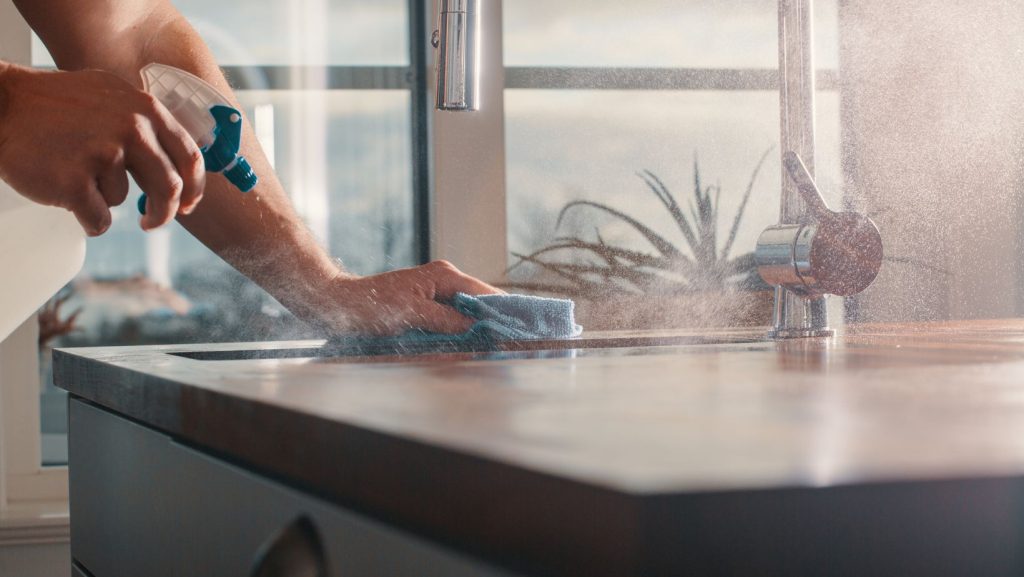
The basics: what “green cleaning” really means
Green cleaning goes far beyond swapping a few harsh chemicals for “eco” bottles. It’s a holistic program that pairs safer products with responsible procedures, properly trained crews, and continuous quality checks. Done right, it protects people and the planet while still delivering the spotless surfaces regulators and occupants expect.
1. A healthier workplace for everyone
Traditional cleaners often contain volatile organic compounds (VOCs) linked to eye, skin, and respiratory irritation. When these products evaporate, they can linger in indoor air for hours—or even days—irritating employees and visitors alike. Greener alternatives dramatically cut those exposure risks by eliminating or reducing the most hazardous ingredients.
The payoff is concrete: improved indoor air quality means fewer sick days, fewer asthma flare-ups, and better overall comfort. Independent field studies in office environments have recorded measurable drops in airborne particulates and allergens—plus a spike in employee-reported comfort—after switching to low-VOC protocols.
2. Productivity gains you can feel
Cleaner air supports clearer thinking. Meta-analyses of workplace studies consistently show that cognitive scores climb as CO₂ and VOC levels drop. The result: sharper focus, faster decision-making, and better business outcomes. Facilities experts often highlight the hidden cost of “presenteeism”—employees who show up but operate below peak capacity because headaches, irritation, or fatigue are triggered by chemical fumes. Green cleaning delivers a quieter, fresher atmosphere that helps talent perform at its best.
3. Environmental responsibility that scales
Every bottle, wipe, and floor finish has a lifecycle footprint: extraction, manufacturing, shipping, use, and disposal. Certified green products avoid problem ingredients such as phthalates, nonylphenol ethoxylates, and corrosive ammonia compounds. This reduces aquatic toxicity when residues go down the drain and lowers greenhouse-gas emissions tied to volatile solvents.
For multi-tenant properties or large campuses, the aggregate impact is massive. A half-million-square-foot office switching to concentrated, biodegradable chemicals can keep over one ton of hazardous waste out of landfills each year while cutting packaging plastic nearly in half.
4. Meeting (and beating) compliance targets
Regulators are paying attention. State air-quality boards are tightening VOC limits in consumer and industrial cleaners, while workplace-safety agencies demand clear protocols for chemical handling and labeling. Green building frameworks such as LEED and WELL award points for adopting a documented green-cleaning policy and purchasing certified products. Achieving those credits is no longer a “nice-to-have”; major commercial landlords, REITs, and corporate tenants now write environmental performance targets directly into leases.
5. Yes, it’s cost-effective
Critics sometimes assume eco-friendly equals expensive, but field data tells another story. Facilities that migrate to certified concentrates frequently cut annual chemical spend by 10–30 percent thanks to reduced dilution errors, fewer shipments, and less product waste. Equipment upgrades—such as microfiber systems that use 95 percent less water—trim labor time per square foot, multiplying the savings.
Longer term, fewer workers’-compensation claims for chemical burns or respiratory ailments translate into lower insurance premiums and a stronger safety record.
6. Brand trust and community perception
In the age of social-media transparency, occupants notice the scent—or lack thereof—when they walk into a freshly cleaned lobby. A subtle citrus note from plant-based surfactants beats the harsh ammonia odor that screams “toxicity.” Clients, patients, parents, and gym members instinctively equate that fresh sensation with professionalism, caring, and modernity—powerful differentiators in a crowded market.
7. Building your green-cleaning roadmap
| Step | What to do | Practical tip |
|---|---|---|
| Audit | List every chemical, tool, and procedure in current use. | Include dilution ratios and safety-data sheets. |
| Policy | Draft a formal Green Cleaning Plan covering purchasing, training, and QA. | Free templates are available from green-building organizations. |
| Product selection | Choose chemicals verified by EPA Safer Choice, Green Seal, or UL ECOLOGO. | Prioritize concentrates with closed-loop dispensing systems. |
| Equipment | Upgrade to HEPA vacuums, microfiber pads, and auto-scrubbers with low-moisture modes. | Look for vendors certified under CIMS-GB to streamline vetting. |
| Training | Teach dilution control, color-coded cloths, and cross-contamination prevention. | Short digital micro-modules keep crews up to date. |
| Measurement | Track chemical usage per 1 000 ft², ATP surface counts, and occupant satisfaction. | Quarterly dashboards make progress visible. |
8. Demystifying product labels
“Eco,” “natural,” and “green” can be empty buzzwords. Trustworthy certifications include:
- EPA Safer Choice – Ingredients screened against a comprehensive list of hazardous chemicals, with performance tests and packaging review.
- Green Seal GS-42 – Adds strict requirements for worker training and sustainable janitorial operations.
- UL ECOLOGO – Life-cycle assessment covering energy, manufacturing emissions, and recyclability.
A quick QR scan of the certification number confirms legitimacy—no greenwashing here.
9. Shine Bright Cleaning’s commitment
At Shine Bright, our crews adopted certified green protocols long before they were trendy:
- 100 percent Safer Choice or Green Seal chemicals on every routine clean.
- HEPA backpack vacuums that capture dust as small as 0.3 microns.
- Digital QA app with timestamped photos after each visit—transparency you can verify.
- Ongoing staff development: every technician logs at least 12 hours of sustainability and safety training each year.
We tailor programs for sensitive environments—clinics, K-12 classrooms, fitness centers—ensuring each site meets its unique health goals and regulatory obligations.
10. Ready to make the switch?
Upgrading to a green cleaning program pays dividends in occupant wellbeing, regulatory compliance, cost savings, and brand reputation. If you’re operating in the Bay Area and want a partner who handles the heavy lifting—from policy design through execution—get in touch with Shine Bright Cleaning today. We’ll schedule a no-obligation walkthrough and deliver a custom proposal within 24 hours.
Healthy people, happy planet, spotless spaces—that’s the Shine Bright promise.


